The Woman for the Moment
By I. Rhonda King Former Ambassador/Permanent Representative of Saint Vincent and the Grenadines to the United Nations, 2013-2026 On 30…

By I. Rhonda King Former Ambassador/Permanent Representative of Saint Vincent and the Grenadines to the United Nations, 2013-2026 On 30 July 2026 the Security Council held its first straw poll in the race to select the tenth Secretary-General of the United Nations. Seven candidates are vying for the post. Carolyn Rodrigues-Birkett of Guyana, the endorsed candidate of the Caribbean Community, entered the contest only six weeks before that straw poll and was placed second, a single vote behind the frontrunner. The contest is now genuinely open, and this essay wishes to underscore plainly what she brings to it. Her record spans more than three decades of public service. She began among the Indigenous communities of Guyana’s interior and entered her country’s cabinet at twenty-seven, the youngest minister in its history, first with the Amerindian Affairs portfolio and later as Minister of Foreign Affairs, Foreign Trade and International Cooperation. She served in parliament. She served as a senior international civil servant. She now leads Guyana’s Permanent Mission to the United Nations, where for two years she directed her country’s delegation on the Security Council during a term widely regarded as principled and effective. Her vision for the organization is pragmatic and unsentimental. She has called for a United Nations that is agile, efficient, and fit for purpose. She has committed herself to preventive diplomacy, to early engagement where crisis is gathering, and to a fairer place for the developing world in the institution’s decisions. Asked what the next Secretary-General must be, she answered with a job description rather than a slogan: administrator, peacemaker, mediator, broker, negotiator, convener, spokesperson. Her qualifications, her acumen, and her temperament are not in question. Fellow diplomats commend them across regional groups. They are also not the argument of this essay. The argument of this essay is that her biography and her sensibilities meet the moment in a way that no curriculum vitae can capture, and that to see this clearly one must look past the candidate to the civilization that formed her. Consider first the moment itself. The world is fragmenting. Peoples who once traded, studied, and negotiated together now regard one another with settled distrust. The arrangements of 1945 are strained, unable to adequately address the issues and nothing proposed to replace them has earned the world’s assent. The office of Secretary-General sits at the exact center of this condition, because the office is, before anything else, an office of mediation among peoples who do not trust one another. The Charter gives its holder few powers. What it gives instead is a position, the one seat at the table that belongs to no bloc, and everything the office has ever achieved has been achieved by persuasion across lines of suspicion. The question before the membership is therefore precise. Who among the candidates was formed for that work? George Lamming supplied the beginning of an answer decades ago. “The Caribbean society was perhaps the first global experiment in human history.” The claim is not rhetorical. Five centuries ago, on a chain of small islands and the continental shores around them, the peoples of four continents were thrown together, most of them by violence, and required to compose a common life. Indigenous Caribbean, African, Indian, European, Chinese, Arab, and Jewish inheritances met in the same small places and could not avoid one another. What emerged from that encounter is what I have called, since 2008, the Caribbean Sense of Life. The Caribbean Sense of Life is a hybridized psyche, an instinct for living among differences that cannot be dissolved, a disposition toward relation where other civilizations reached for separation. The Caribbean did not read about globalization. The Caribbean was the experiment, run first and run hardest, and its people carry the findings in their manner of being. The former prime minister and now opposition leader of Saint Vincent and the Grenadines, Dr. The Hon. Ralph Gonsalves, has described the region as “containing the songs of the Indigenous people, the rhythm of Africa, the chords of Asia, the melody of Europe, and the lyrics of the Caribbean itself.” That description is a demographic fact before it is metaphor. The findings of the “first global experiment” experiment deserve to be stated, because each one bears directly on the acumen the present task requires. The first concerns freedom. Leonard Tim Hector observed that the Caribbean is the only place in the history of the world where the overwhelming majority of the population were enslaved or indentured, and he drew the consequence: “Freedom in the Caribbean automatically posed the question of mass rule.” Freedom in our Caribbean civilization was never a private possession. It was from the outset the claim of the many, and a leader formed in that tradition possesses an instinct for the legitimacy of the whole membership, the small states and the large, the one hundred and ninety-three and their peoples behind them. The second finding concerns knowledge. Édouard Glissant, whose thought runs through the Caribbean intellectual tradition, held that some things resist complete comprehension, that identities and histories have the right to remain complex, and that meaning emerges through relation. I have written elsewhere that the Caribbean sense of life embraces complexity, improvisation, and interconnection, and that it teaches wellbeing as a process of continuous becoming. This is precisely the epistemology of good diplomacy. The mediator who insists that every party be fully transparent, fully classified, fully understood before engagement will never convene the first meeting. The mediator schooled in relation begins where the parties actually are. The third finding is related to scale. Smallness affords coherence. In small systems responsibility is local and consequences are visible, and those who govern in them cannot hide behind abstraction. The diplomats of small states learn early that survival depends on attention, on credibility, and on the quality of their arguments, because nothing else is available to them. And the fourth finding concerns ideas themselves. I have argued in the collected insights that the ability to generate ideas now counts for more “than raw economic potential, technological advantage, or military power in determining who exercises genuine leadership”. The Secretary-General commands no divisions and no budget worth the name. Ideas, and the persuasion they make possible, are the entire currency of the office. Let us attach Carolyn Rodrigues-Birkett to that claim. She is a daughter of this experiment. Her public life began among the oldest inheritance in the hemisphere and proceeded outward through national government to the councils of the world. At every stage the work was the same—it brought parties who mistrusted one another to a common position, whether villages and ministries, capitals and blocs, or members of a divided Security Council. A sensibility formed in the “first global experiment” is preparation for a world now fragmenting along the very lines the Caribbean has, largely, if not, already fully reconciled. This is the marriage of biography and moment. The membership is being asked to draw, for the first time, on the one regional sensibility whose entire history has been rehearsal for the present crisis. One further quality should be noted, quietly. The institution’s deepest deficit is belief, and the deficit is sharpest among the young, who inherit the world the United Nations was built to protect and see little reason to trust it. She knows something of this from the inside. She held national office at an age when most of her counterparts were still awaiting their first appointment, and among the many appointments at the United Nations she was also chosen to co-facilitate the establishment of the UN Youth Office . A Secretary-General who entered public life young, and who helped build the institution’s own house for the young, can speak to that generation with the credibility of example. New believers are not recruited by communiqué. They are persuaded by leaders in whom they recognize a version of their own beginning. There is a second claim, and it reinforces the first. Latin America has held the office; Javier Pérez de Cuéllar of Peru served with distinction for a decade. The Caribbean has never held it. In eighty years, the region that Lamming named the first global experiment has never once been asked to lead the institution that now presides over the experiment’s planetary sequel. Equity alone would make this worth correcting. But the deeper point is that the omission has deprived the United Nations of a resource. The Enlightenment that shaped the institution’s founding assumptions was, as I have argued, a project of exclusion in important respects, and a New Enlightenment must be one of integration, where the wisdom of multiple traditions reshapes our understanding of the common life. The Caribbean formation remains untried precisely when it is most needed. None of this ignores the institution’s material condition. The next Secretary-General inherits a liquidity crisis, the unfinished labor of the UN80 reforms, and wars the organization has been unable to stop. These are serious matters, and her record answers them; the reform of a strained institution is administrator’s work, and the administrator’s competence is the part of her candidacy that no one disputes. But the institutional crisis is the surface of the civilizational one, and an office managed without the deeper diagnosis will be managed into irrelevance. The United Nations was founded as an experiment in whether the world’s peoples could compose a common life. The Caribbean was where the seeds of that experiment began five hundred years earlier and has the longest record of results. In Carolyn Rodrigues-Birkett those results have taken the form of a person, seasoned by every level of the work, standing one vote from the head of the field. The membership does not need to imagine what a Caribbean Secretary-General would bring to a distrustful world. It needs only to recognize what the Caribbean has already learned on the world’s behalf, and to choose accordingly. I. Rhonda King Former Amb./PR of Saint Vincent and the Grenadines (2013 – 2026); she was also Former President of ECOSOC / Former President of Security Council. Former Chair of the Fifth Committee and Cofacilitator of several UN Processes, most recently the 2025 Intergovernmental Negotiations of the Political Declarations on the Prevention and Control of Noncommunicable Diseases and the Promotion of Mental Health and Non-Communicable Diseases and the ECOSOC High Level Political Forum on Sustainable Development. She is also the author of Caribbean Sense of Life: a Woman’s Journal And Caribbean Sense of Life: Curated Insights
 Related storyGuyana’s debt and the IMFKaieteur News · 18m ago
Source
Originally published by Newsroom
Online news platform
Related Articles
 This is the News Room for Tuesday, August 04, 2026. We’re broadcasting to you on E1, SKAR TV, NTN, and TARZEE…Newsroom · 5h ago
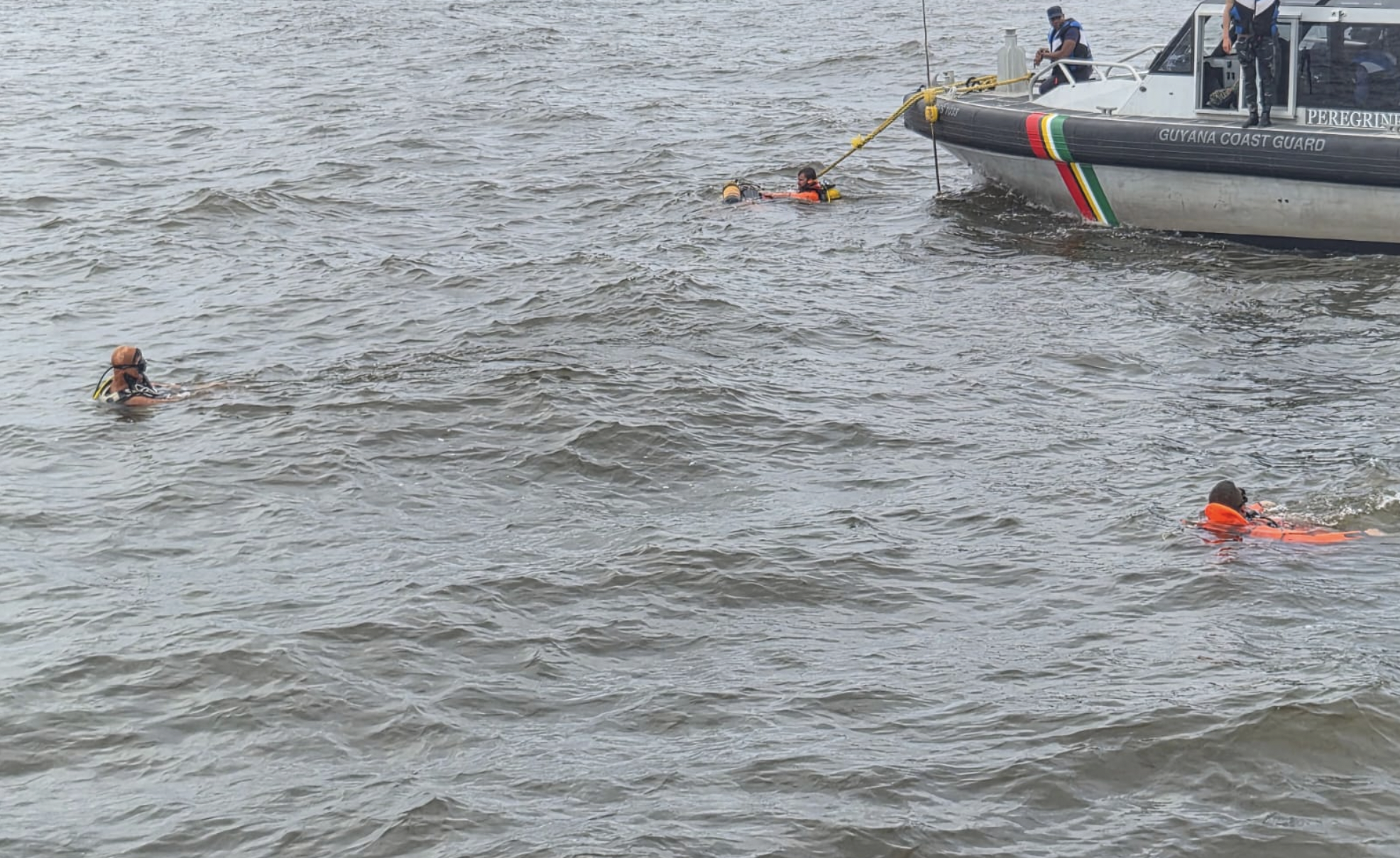 Government concludes MV Barima search and recovery operationsNews Source Guyana · 6h ago
 The community of Kaneville, East Bank Demerara is set to undergo renovations as part of the Government’s…Newsroom · 7h ago


What readers are saying (0)
View all commentsNo comments yet — be the first to weigh in.